
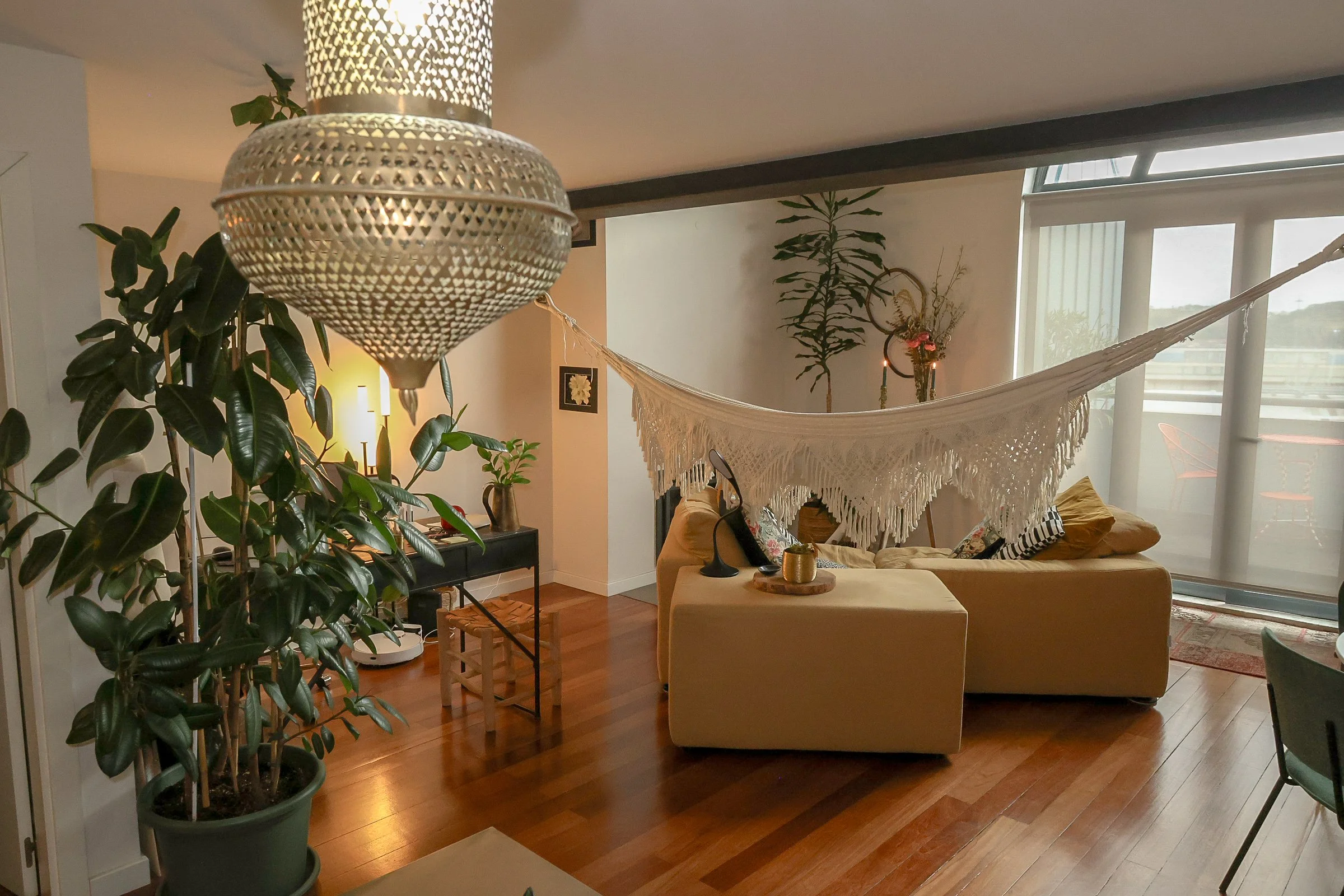
What if realizing the healing side of spaces became a part of your therapy sessions?
A few simple, science-informed changes to your therapy space can deepen sessions, increase in-person attendance, and help you do your best work — and you can extend your insights onto your clients too.

“I felt a shift in my sessions right away, and so did my clients.”
- Kathleen K., Psychotherapist, Ontario, Canada
What shifted for Kathleen:
Practice enrollment increased by 30% within weeks
In-person attendance increased by 20%
“I feel different. And maybe that’s the most important thing, because in therapy my nervous system regulates their nervous system.”
Hello, I’m Lyndsay,
I had a moment when I was with my mom in the hospital after her fifth stroke. Right before being released, a therapist came into my mom’s room and asked about the physical aspects of her home — stairs, accessibility, ease of getting around. I thought to myself:
What if therapists explored the emotional aspects of spaces? How clients/patients actually feel and function within their spaces. How THEY (therapists) actually feel and function within their OWN spaces.
Too often spaces hold us back us without us even noticing. There’s a growing body of research that suggests our spaces (“our built environments”) are our secret weapons to taking more control over our own health and wellness — and BLLIS exists to find the shortest path to a feel-good space.
I’m a Biophilic Designer, Feng Shui practitioner, and Business Consultant who has spent 15+ years discovering what makes spaces work.
I would love to explore what’s possible within your space.
Lyndsay Lowman
Founder of BLLIS
PS: Before BLLIS, I led brand development + spatial education journeys for over 2,000 small businesses (i.e.: learning centers) supporting over 500,000 students — creating observable, repeatable space changes that supported learning outcomes and business performance at scale.

Why This Matters
Spaces are way more than what you see, they are an active participant in healing, and day-to-day health and wellbeing.
Research shows elements of nature reduce stress, improve mental clarity, and self-expression reduces depression.
Your space affects you. You affect your clients. And small changes create profound ripples.
KATHLEEN’S EXPERIENCE:
After Our First Session:
“The overwhelming feeling I have is this feeling of possibility. You ask very thoughtful questions and push appropriately—to dive deeper into what I want for my business and my clients. Through the lens of design (which has proven research behind it), you help me understand what changes to make in my space to help my clients experience what I want them to experience.”
After Our Second Session:
“I had two clients in the space yesterday. One said, ‘Wow, I love your space.’ Strangely, no one noticed my desk shifted. She just noticed the space felt different. Then my other clients — a couple who come every week — we had the best session. Best being the hardest, best being we really got through some stuff. I feel different. I feel very energetically calm in the space. I like it better. I want to go down there now.” Kathleen was so moved she wrote about her experience: Read: Mental Health and Your Home - My Experience with BLLIS

You care deeply about your clients’ progress, and so do I.
The Journey to BLLIS is focused on impact - passing along both a customized action plan and the knowledge behind the WHYs to realize positive change in your spaces long after our sessions end. While every journey is individualized based on needs, there are basics you can be sure to expect:
A space assessment (actual vs. ideal experiences) with measurements that matter
A dedicated learning session on Biophilic Design and science-informed design principles leaving you with new perspectives to explore on your own
Science-informed interventions tailored to your practice
A detailed action plan you can implement immediately
Tools to extend this work to your clients and/or me as your space collaborator
Sessions are 100% online, immersive, and co-creative providing an experience that is accessible and forever positions you as the lead designer of your spaces.
If one picture = 1,000 words, what does a lived experience equal?
Interior design has been too aspirational, unattainable, and even if we achieve the picture-perfect look, it won’t make us happy. Why? Because our spaces are more than a pretty picture, they have a profound impact on our health and provide full-sensory experiences in which 90% of our lives unfold. If our spaces are off, so are we.
“When I got rid of that big credenza, I felt like I was pushing it off my chest. Once that was gone, I could breathe a little easier, and the process flowed more freely.”
- Abby, ICU Nurse, United States
BEFORE
AFTER
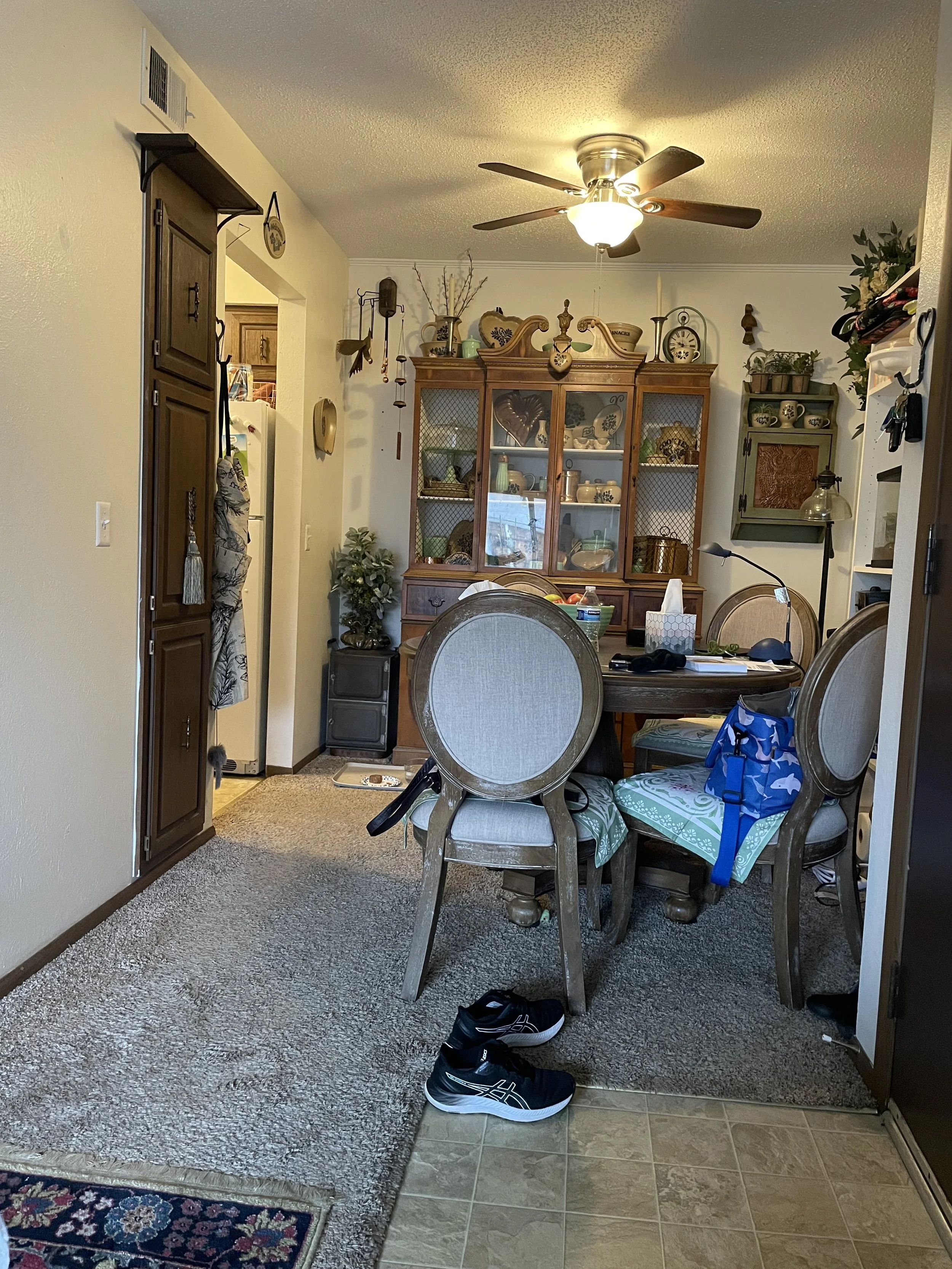
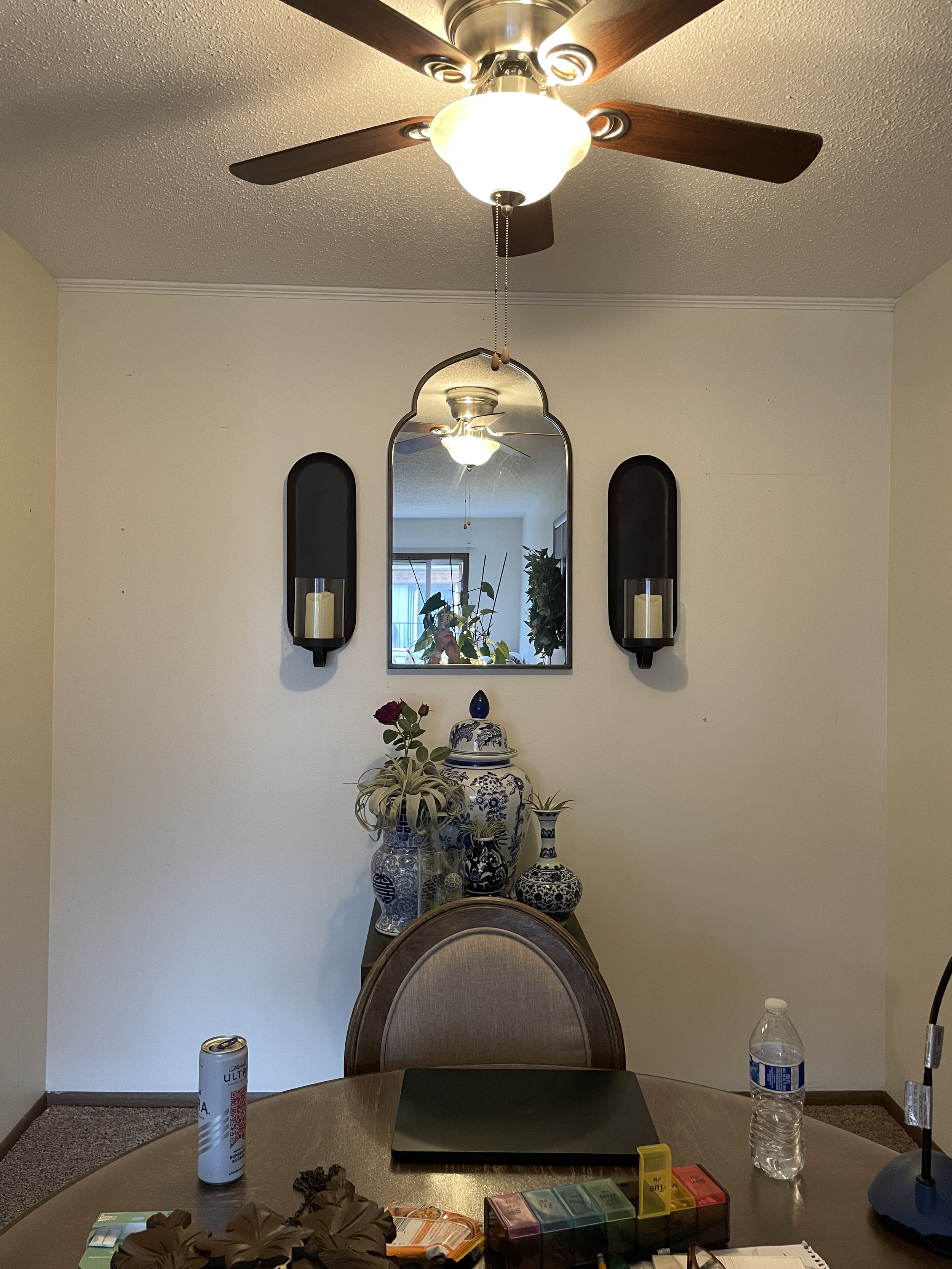
Creating white space for more visual and physical room to breath, along with a simple mirror to bring in more natural light to a space Abby was avoiding, not only changed the day-to-day experiences within her apartment - it changed the trajectory of her life outside of it.
Curious to Learn More?
Let’s explore what’s possible for your space. No pressure, no obligation - just a conversation about your vision and how we might bring it to life